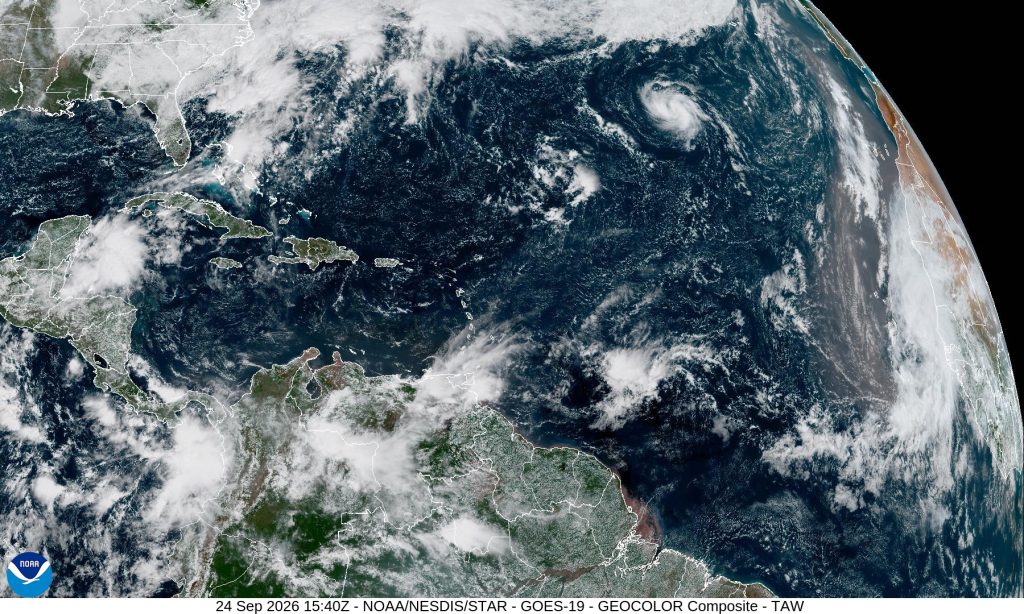
Category: Catastrophe Modeling

Catastrophe modeling methodologies, natural hazard analytics, and PML analysis for insurers and reinsurers.

  • Climate Risk and Insurance Pricing in 2026: How Physical Hazards Are Repricing Every Line of Coverage

    Climate Risk and Insurance Pricing in 2026: How Physical Hazards Are Repricing Every Line of Coverage

    The insurance industry is in structural transformation. Traditional catastrophe models built on 30–50 years of historical loss data no longer capture forward-looking climate risk. Underwriters, actuaries, and risk officers no longer use historical loss experience as a primary predictor of future losses. Instead, they are embedding climate-adjusted loss projections into pricing, coverage decisions, and capital allocation. Every line of property and casualty (P&C) coverage—commercial property, homeowners, business interruption, workers compensation, auto insurance—is being repriced through a climate lens in 2026.

    This repricing is not gradual adjustment. It is fundamental market restructuring. Carriers are narrowing coverage in high-risk geographies, raising premiums to levels that exceed loss experience by large margins, and exiting entire markets where climate risk overwhelms underwriting appetite. Reinsurance costs are spiking. Secondary carriers and excess markets are tightening. The insurance market is contracting in high-risk zones and consolidating around lower-risk geography. For organizations exposed to physical climate hazards, this means higher insurance costs, reduced coverage options, and the possibility of uninsurable risk.

    Catastrophe Modeling in 2026: From Backward-Looking to Forward-Looking

    For decades, insurance carriers relied on catastrophe (CAT) models developed by specialized firms like Risk Management Solutions (RMS), AIR Worldwide, and EQEQ. These models used historical loss data (1900–1980, 1950–2005, etc.), applied statistical distribution fitting, and generated synthetic event catalogs representing potential future losses. The models worked reasonably well when the climate was relatively stable. Loss experience from the past 50 years was a reasonable guide to the next 50 years.

    Climate change has invalidated that assumption. Historical catalogs no longer represent the distribution of future events. Flood frequency is changing. Hurricane intensity distribution is shifting toward higher-category storms. Wildfire risk is expanding geographically and intensifying in existing risk zones. Hail and tornado patterns are shifting. Temperature extremes (heat and cold) are becoming more frequent. Drought patterns are changing, affecting water availability and agricultural losses.

    In response, CAT modelers have begun incorporating climate projections into their synthetic event catalogs. Instead of relying purely on historical loss data, updated models blend historical events with climate-adjusted projections. Models incorporate downscaled global circulation model (GCM) outputs showing temperature, precipitation, and extreme event frequency under different emissions scenarios. Leading modelers (like Moody’s Analytics with its OASIS platform, Jupiter Intelligence, and others) have incorporated climate scenario analysis into their core CAT modeling offerings.

    The practical effect: CAT models in 2026 are showing higher projected losses in climate-exposed geographies than historical models suggested. In coastal zones, flood models show increased frequency of 100-year and 500-year events. In wildland-urban interface regions, wildfire loss projections have increased substantially. In drought-prone areas, agricultural and water-supply loss projections have risen. These updated projections are driving repricing and coverage contraction.

    Synthetic Event Catalog: A statistically representative sample of thousands or tens of thousands of hypothetical future loss events (earthquakes, hurricanes, floods, etc.) generated by catastrophe models. Each event has a location, magnitude, and loss estimate, allowing actuaries to calculate the probability distribution of potential portfolio losses.

    Premium Increases Outpacing Loss Experience

    A key metric of insurance market tightness is the relationship between premium increases and actual loss experience. In a competitive market with stable risk, premiums track loss experience—rates go up when losses go up, and down when losses decline. In a tightening market, premiums increase faster than losses, reflecting reduced competitive capacity and elevated perceived risk.

    In 2026, this relationship is severely imbalanced in high-risk zones. Property insurance premiums in coastal counties, wildfire-exposed zones, and flood-prone areas have increased 30–50% or more over the past 2–3 years, while actual loss experience, though volatile, does not justify increases of that magnitude on historical basis. The premium increases reflect forward-looking climate risk assessment—carriers are charging for expected future losses under climate-adjusted scenarios, not current loss experience.

    This creates a pricing dynamic where insurance becomes increasingly unaffordable for property owners in climate-exposed zones. A homeowner in a coastal zone, wildfire-adjacent region, or flood plain might see insurance costs double over five years while home value grows modestly. At some point, insurance cost exceeds a sustainable percentage of property value, and owners become underinsured or drop coverage entirely. This is the “insurance affordability crisis” that is receiving increasing regulatory and political attention in 2026.

    Commercial property owners in high-risk zones face similar dynamics. A manufacturing facility in a flood-prone region or a hospital in a wildfire-adjacent zone sees insurance costs rise substantially, compressing net operating income and potentially triggering capital reallocation decisions (relocate facility, invest in loss prevention, or accept uninsured risk).

    Coverage Narrowing: What Gets Excluded

    As carriers tighten risk appetite, they are narrowing coverage in multiple ways. The most aggressive approach is geographic exit—simply deciding not to write new policies or renew existing policies in specified high-risk zip codes or regions. California, Florida, and Louisiana have seen multiple major carriers explicitly announce market exits or selective underwriting moratoriums in recent years.

    Short of complete market exit, carriers are narrowing coverage through exclusions and restrictions. Water damage exclusions (e.g., flood, surface water) are becoming standard even in areas not designated as “flood zones.” Wind exclusions or restrictions are appearing in coastal policies. Wildfire exclusions are expanding in California and western regions. Parametric exclusions (where carriers deny claims because mathematical triggers were not met, even if actual property damage occurred) are increasing.

    Sub-limits are also shrinking. A commercial property policy might include coverage for earthquake, but with a $100,000 sub-limit on a $10 million facility. Water-related damage might have a $250,000 sub-limit. Business interruption coverage might be restricted to 30 or 45 days. As sub-limits tighten, organizations face larger uninsured retention.

    Sub-limit: A maximum coverage amount specified for a particular peril or coverage type within a broader insurance policy. A $1 million commercial property policy might include a $100,000 sub-limit for earthquake damage, meaning earthquake losses above $100,000 are not covered.

    Reinsurance Market Effects: Cascading Into Primary Coverage

    Reinsurance—insurance for insurance companies—is the market mechanism that allows primary carriers to transfer catastrophic risk. When a major hurricane causes $50 billion in losses, the primary carriers (State Farm, Allstate, Homeowners Choice, etc.) typically retain the first few billion dollars of loss and cede the remainder to reinsurers (RenaissanceRe, XL Capital, Arch Capital, etc.).

    Climate change is making reinsurance vastly more expensive and less available. Reinsurers are raising prices, narrowing capacity, and tightening attachment points (the loss threshold above which reinsurance kicks in). When reinsurance becomes expensive, primary carriers have to either (a) raise primary insurance premiums to cover higher reinsurance costs, or (b) reduce the amount of risk they are willing to retain, which means pulling back from high-risk markets.

    The reinsurance market tightening in 2025–2026 is particularly acute. Global reinsurance capital faced elevated claims from 2023 and 2024 catastrophes (Morocco earthquake, Turkey/Syria earthquakes, hurricane season losses). Reinsurers raised rates and tightened terms for 2026 renewals. This cascades directly to primary carrier costs and, ultimately, to consumers and commercial policyholders.

    Some primary carriers are seeking alternative risk transfer mechanisms—parametric insurance, cat bonds, insurance-linked securities—to diversify their risk transfer beyond traditional reinsurance. These instruments transfer risk to capital markets but introduce basis risk (the possibility that indices or parametric triggers do not perfectly match actual losses).

    Parametric Insurance: Growth and Limitations

    Parametric insurance is a risk transfer mechanism that pays based on an objective index or trigger rather than on actual loss incurred. For example, a parametric flood insurance product might pay if rainfall in a specified area exceeds 5 inches in a 24-hour period, regardless of whether the policyholder’s property was actually damaged.

    Parametric insurance is growing in 2026 as a complement or alternative to traditional indemnity insurance. Advantages include faster claims processing (payment triggers when the index is met, no need for loss adjustment), reduced moral hazard (index is objective, not subject to claims inflation), and potential for lower cost (more efficient pricing if index closely matches actual loss distribution). For organizations willing to accept basis risk—the possibility that the index triggers but actual damage is lower—parametric insurance offers faster recovery liquidity.

    However, parametric insurance has significant limitations. It works best for hazards with strong correlation between index (e.g., rainfall) and loss (flood damage). For wildfire, correlation is weaker—a fire index might trigger based on temperature and humidity, but actual damage depends on local vegetation, fuel load, and proximity to built structures. For hail, parametric instruments struggle because hail swaths are geographically concentrated but indexes are typically broad (county or state level).

    Many organizations are using parametric insurance as a top-up layer above traditional indemnity coverage—parametric provides fast liquidity to fund recovery immediately after an event, while indemnity coverage handles long-tail rebuilding and restoration costs. This hybrid approach is becoming more common in 2026 as traditional insurance becomes unavailable or unaffordable.

    Basis Risk: The risk that a parametric or index-based insurance payout does not perfectly match actual losses. If rainfall triggers a $500,000 parametric flood payment but actual property damage was only $200,000, the policyholder keeps the excess and bears basis risk. Conversely, if actual damage exceeds the trigger-based payout, the shortfall is uninsured.

    Social Inflation and Climate Inflation: The Compounding Effect

    Traditional inflation—rising costs for labor, materials, medical care—has long affected insurance loss estimates. In recent years, a new factor has emerged: “social inflation,” a tendency for jury awards, settlement sizes, and claim costs to grow faster than commodity inflation. This reflects broader societal awareness of business liability and increased willingness to hold corporations financially accountable for damages.

    Climate change is amplifying social inflation. When a wildfire destroys a neighborhood due to utility company negligence or lax fire prevention, juries award large settlements. When a flood damages a commercial property and business interruption losses are substantial, claims are aggressively prosecuted. When heat-related injuries occur in workplaces that failed to implement adequate protections, liability exposure is significant.

    For insurance carriers, the combination of climate-driven loss frequency increases plus social inflation is a one-two punch. First, more events occur (higher frequency). Second, each event costs more to settle than historical models predict (inflation plus social inflation). This dynamic is driving rapid repricing and capacity reduction in lines most exposed to these factors: commercial general liability, commercial property, workers compensation in high-heat industries, and homeowners coverage in wildfire zones.

    Market Segmentation: The Uninsurable Gap Widening

    The insurance market in 2026 is increasingly segmented. Low-risk properties in favorable geographies (temperate regions, low hazard exposure) can still access reasonably priced insurance through competitive markets. High-risk properties in climate-exposed zones face a very different market: limited capacity, high prices, narrow coverage, or outright unavailability.

    This segmentation is creating an “uninsurable” population—properties or risks that carriers will not underwrite at any price because climate risk exceeds underwriting appetite. In these cases, property owners turn to insurer-of-last-resort programs like state FAIR plans (California FAIR Plan, Florida Citizens Property Insurance Corp.), which are typically undercapitalized, poorly funded, and provide minimal coverage at high cost. Alternatively, owners self-insure (accept the uninsured risk).

    For commercial properties, uninsurability creates operational and financial risk. Lenders require evidence of insurance before approving mortgages. Investment properties become harder to finance or refinance. Corporate risk management becomes more dependent on self-insurance reserves and risk mitigation investments (hardening, relocation, business continuity planning) rather than risk transfer via insurance.

    Strategic Responses: Risk Mitigation, Self-Insurance, and Risk Transfer Innovation

    Organizations facing unaffordable or unavailable insurance are pursuing multiple strategies:

    Physical Risk Mitigation: Investing in loss prevention and hardening measures to reduce climate risk exposure. Wildfire-exposed properties invest in defensible space, fire-resistant materials, and sprinkler systems. Flood-exposed properties invest in elevated mechanical systems, flood barriers, or pumping capacity. Heat-exposed facilities invest in cooling systems and worker protections. These investments may be capital-intensive but reduce insurance risk and improve operational resilience.

    Risk Transfer Alternatives: Using parametric insurance, catastrophe bonds, insurance-linked securities, or captive insurance (corporate self-insurance subsidiary) to transfer risk outside the traditional insurance market. These mechanisms are more expensive and complex than traditional insurance but provide access to capital markets risk appetite when traditional insurance is unavailable.

    Geographic or Business Model Adjustment: For organizations with climate-exposed facilities or operations, relocation, divestment, or business model change might be economically rational. A manufacturing facility in a flood-prone zone might relocate to lower-risk geography. A agriculture operation in a drought-prone region might shift to less water-intensive crops or relocate production. These decisions are capital-intensive and disruptive but may be necessary if climate risk becomes unmanageable.

    Regulatory and Policy Engagement: Working with insurance regulators, state legislatures, and federal agencies to advocate for market stabilization measures. Some advocacy focuses on mandating coverage (“coverage requirement” legislation that requires insurers to offer minimum climate-related coverage). Other advocacy focuses on subsidies or public risk transfer mechanisms to stabilize markets for essential services (hospitals, utilities, emergency services).

    Implications for Broader ESG and Risk Strategy

    The rapid evolution of insurance pricing and availability is not purely an insurance industry phenomenon—it is a market signal of physical climate risk. When carriers systematically narrow coverage or exit geographies, they are sending a strong market signal that physical climate risk is severe enough that financial viability is threatened. This signal has implications far beyond insurance costs: it affects real estate values, lender risk appetite, corporate capital allocation, and investment decisions.

    For organizations undergoing climate risk disclosure under ISSB, TNFD, California law, or CSRD, insurance market tightening is relevant evidence. If insurance carriers are exiting high-risk geographies, that is a strong signal that physical climate risk is substantial. Organizations facing uninsurable risk should incorporate this into their climate risk narrative and strategy disclosure.

    For broader context on climate risk frameworks and cross-sector implications, see Physical and Financial Climate Risk in 2026: The Cross-Sector ESG Disclosure Framework Every Organization Needs. For restoration contractor perspectives on insurance market changes, refer to How Physical Climate Risk Is Rewriting Restoration Business Strategy in 2026. For technical detail on catastrophe modeling updates, see Climate Risk Pricing: Catastrophe Model Updates, and for parametric insurance applications, read Parametric Insurance: Index-Based Risk Transfer.

    Conclusion

    Insurance pricing in 2026 reflects a fundamental restructuring of the industry’s relationship to climate risk. Updated catastrophe models incorporating climate projections are showing higher expected losses in climate-exposed zones. Carriers are responding with aggressive repricing, coverage narrowing, and market exits. Reinsurance costs are elevated, parametric insurance is growing, and the gap between insurable and uninsurable risk is widening. For organizations exposed to physical climate hazards, the insurance market is no longer a risk transfer mechanism of last resort—it is an indicator that physical climate risk is material and that investment in risk mitigation and operational resilience is economically necessary. The era of cheap insurance in high-risk zones is over.

  • Climate Risk Pricing and Catastrophe Model Updates: How Insurers Quantify Escalating Natural Disaster Losses

    Climate Risk Pricing and Catastrophe Model Updates: How Insurers Quantify Escalating Natural Disaster Losses


    Climate Risk Pricing and Catastrophe Model Updates: 2026 Market Realities


    Climate Risk Pricing and Catastrophe Model Updates: 2026 Market Realities

    Catastrophe Modeling and Climate Risk Pricing Defined

    Catastrophe modeling is the quantitative assessment of natural hazard risk (hurricanes, earthquakes, flooding, wildfires, hail, tornadoes) using probabilistic simulations integrating historical event data, atmospheric physics, economic exposure mapping, and structural vulnerability analysis. Climate risk pricing reflects the incorporation of evolving climate patterns, increasing frequency/severity of extreme weather, and updated loss models into insurance premium calculations. The 2026 market is characterized by $100B+ annual insured natural catastrophe losses—the fifth consecutive year exceeding this threshold—driving fundamental reassessment of catastrophe models and climate-adjusted pricing.

    Natural Catastrophe Losses: 2026 Market Magnitude

    The global insured loss impact from natural catastrophes has reached unprecedented levels. Total insured losses from natural disasters in 2025 exceeded $127 billion—the fourth consecutive year exceeding $100 billion. In 2026, insured catastrophe losses are tracking toward $115–135 billion based on year-to-date activity, representing the fifth consecutive year of $100B+ losses.

    This represents a fundamental shift from historical baseline. From 1990–2019, average annual global insured nat cat losses were $45–$65 billion. The move to consistent $100B+ annual losses reflects both increased frequency of extreme weather events and dramatically elevated insurable values in exposed regions (urbanization, property value inflation, increased development in hazard-prone areas).

    Global insured natural catastrophe losses have increased from an average of $52 billion annually (2010–2019) to $118 billion annually (2021–2026). This 127% increase in insured losses in six years is unprecedented in insurance history and has fundamentally destabilized traditional catastrophe model assumptions.

    California Wildfires: The $40 Billion Exposure

    California wildfire exposure has emerged as the single largest source of catastrophic risk in the North American insurance market. 2025 wildfire losses totaled $48 billion in insured damages—the costliest single-year wildfire loss event in history. 2026 wildfire activity has already generated $32 billion in losses through March, tracking toward $45–60 billion for the full year.

    Loss Drivers: Multiple factors have escalated California wildfire losses:

    • Extended Fire Season: Climate warming has extended the California fire season from June–October to May–November (17 months), providing attackers with longer window for ignition and spread.
    • Fuel Drying: Multi-year drought cycles have reduced fuel moisture content, making vegetation more flammable. Forest fuel moisture has declined from historical 60% average (1980–2010) to 25–35% in recent years.
    • Urbanization in Wildland-Urban Interface: Development in high-risk wildland-urban interface zones has increased insurable values at risk. Properties in vulnerable zones have increased from 2.3 million (2000) to 4.8 million (2026)—a 108% increase.
    • Extreme Wind Events: Diablo winds and Santa Ana wind patterns have intensified in frequency and severity, driving rapid fire spread. October 2025 wildfires propagated at 15+ mph in some areas, overwhelming evacuation protocols and destroying properties ahead of suppression capabilities.

    Insurance Market Response: California’s property insurance market has experienced dramatic contraction in response to wildfire exposure:

    • State Farm suspended new homeowners insurance applications in California (August 2024) and subsequently exited the market, withdrawing 10,000+ policies
    • AIG, Chubb, and Hartford have implemented substantial rate increases (30–50%) in high-fire-risk zones and reduced capacity
    • California Fair Plan (the insurer of last resort) has grown from 400,000 policies (2020) to 1.2 million policies (2026), with premiums now exceeding commercial market rates
    • Private insurers have implemented defensible space requirements (100+ feet of cleared vegetation) as policy conditions

    Economic Impact: Wildfire exposure has become the primary determinant of home values in California. Properties in Zones 1–2 fire risk (highest exposure) command 25–40% lower prices than equivalent properties outside hazard zones. Mortgage lenders have begun implementing wildfire risk underwriting, denying mortgages for properties deemed uninsurable.

    Severe Convective Storms: The $50 Billion Peril

    Severe convective storm activity (thunderstorms producing hail, tornadoes, straight-line winds, and flash flooding) has escalated dramatically across the central and southeastern United States. 2025 convective storm losses totaled $67 billion in insured damages. 2026 losses are tracking toward $50–$65 billion based on March activity.

    2025 Notable Events:

    • June 2025 Derecho (Chicago): $8.2 billion insured loss from 90+ mph winds affecting 1.8 million properties
    • July 2025 Hailstorm (Denver metro): $6.1 billion insured loss from hail up to 4.5 inches in diameter
    • August 2025 Flash Flooding (Houston/Dallas corridor): $4.8 billion insured loss from 18–24 inches of rainfall in 48 hours

    Climate Drivers: Convective storm escalation reflects multiple climate factors:

    • Atmospheric Instability: Warmer surface temperatures and higher atmospheric moisture content increase atmospheric instability—the thermodynamic fuel for thunderstorm development. Storm day CAPE (Convective Available Potential Energy) has increased from historical 3,000–4,000 J/kg to 5,000–7,000 J/kg in recent years.
    • Jet Stream Dynamics: Northward migration of polar jet streams has created deeper, more persistent troughs in the midwest and high plains, favoring multi-day severe weather outbreaks. Outbreak duration has increased from 2–3 days (2000–2015) to 4–6 days (2021–2026).
    • Urban Heat Island Effect: Rapid urbanization in Texas, Oklahoma, Kansas, and the Great Plains has created urban heat islands that locally enhance atmospheric instability and trigger thunderstorm development.

    Insurance Market Tightening: Carriers have substantially reduced hail and convective storm capacity in high-risk regions:

    • Average homeowners insurance premiums increased 28% (2025) and 18% (2026) in Texas, Oklahoma, Kansas, and Colorado
    • Some carriers have implemented “hail season” coverage limits ($10,000–$25,000 sub-limits) in high-exposure areas
    • Deductibles have increased from $500–$1,000 (historical) to $2,500–$5,000 in high-risk zones
    • Some carriers have exited Texas and Oklahoma entirely, citing inadequate premium pricing for convective storm exposure

    Catastrophe Model Updates and Climate Integration

    The consistent $100B+ annual natural catastrophe loss environment has forced fundamental updates to catastrophe modeling approaches. Leading catastrophe model vendors (RMS, AIR Worldwide, Moody’s Analytics) have released substantially revised models in 2025–2026 incorporating climate-adjusted hazard frequencies and loss distributions.

    Historical Model Limitations: Traditional catastrophe models (developed 2005–2015) relied heavily on historical event frequency and severity data from 1960–2005. These models systematically underestimated risk in several ways:

    • Stationarity Assumptions: Models assumed historical hazard frequencies remained constant (stationary) over time. This assumption is now demonstrably violated. Hurricane formation rates in the Atlantic have increased from 6 per season (historical average) to 8–9 per season (2020–2026). Hail frequency in the high plains has increased 35% over two decades.
    • Underestimation of Tail Risk: Models underestimated the probability of extreme events (hurricanes, wildfires, hailstorms exceeding 100-year historical magnitudes). 2025–2026 events have repeatedly exceeded historical 100–200 year return periods, indicating model miscalibration.
    • Compound Event Underestimation: Models assumed independence between hazards. However, 2025–2026 events have demonstrated substantial correlation: droughts driving wildfires, flooding following wildfires (loss of vegetation), simultaneous hurricane activity and warm-water-fueled typhoons.

    2025–2026 Model Revisions: Updated catastrophe models now incorporate:

    • Climate-Adjusted Hazard Frequencies: New models estimate Atlantic hurricane frequency at 8–10 per season (versus 6 historical average), with projected intensification of Category 4–5 hurricanes by 15–25%. Severe convective storm frequency in the high plains has been increased 30–40% relative to 2015 models.
    • Non-Stationary Distributions: Rather than assuming constant hazard frequencies, models now employ time-varying Poisson processes that reflect increasing trend in event frequency and severity over time. These models project 15–25% increases in annual loss expectations by 2030.
    • Compound Event Modeling: Advanced models now incorporate probabilistic dependencies between hazards. Flood loss distributions now explicitly account for increased flood probability in post-fire watersheds. Hurricane loss models now account for compounding rainfall-induced flooding.
    • Economic Exposure Escalation: Models incorporate projected urbanization and property value growth in high-risk zones. Texas and Florida property values are projected to increase 5–7% annually through 2030, amplifying insurable values at risk.

    Model Uncertainty and Confidence Intervals: A critical insight from 2025–2026 catastrophe losses is the dramatic uncertainty in model estimates. RMS’s 2026 Atlantic Hurricane Model projects mean annual loss of $23.4 billion (versus $14.2 billion in 2015 model), with 90% confidence intervals ranging $8.2 billion to $52.3 billion—a 537% spread. This massive uncertainty has profound implications for reinsurance pricing.

    Carrier Market Retreat and Geographic Segmentation

    The combination of consistent $100B+ natural catastrophe losses and updated catastrophe models projecting continued loss escalation has triggered substantial market retreat by major property and casualty carriers:

    Homeowners Insurance Market Contraction: Major carriers have exited or substantially reduced homeowners exposure in high-risk states:

    • California: State Farm exited; Chubb, AIG reduced capacity; Fair Plan policies grew from 400k (2020) to 1.2M (2026)
    • Florida: American Coastal Insurance Company (AIC) insolvent (2023); Universal Insurance Holdings exiting; remaining carriers implementing 30–50% rate increases
    • Texas: State Farm suspended new policies (2022); Allstate reduced capacity; regional carriers growing to fill gap at 40–60% premium increases
    • Louisiana: Multiple carriers exited post-Hurricane Ida and subsequent storms; state Fair Plan grew 180% since 2020

    Commercial Property Underwriting Tightening: Commercial property underwriting has become substantially more restrictive, with carriers implementing:

    • Mandatory physical inspections and drone imagery for all properties exceeding $2 million replacement value in high-risk zones
    • Retroactive valuation adjustments for properties whose exposure has increased due to climate/development changes
    • Catastrophe model-specific underwriting: properties modeled to have 5%+ annual probability of loss exceeding policy limit face substantial premium increases or coverage limits reduction
    • Climate-adjusted deductibles: deductibles increase 0.5–2% for each year of elevated natural catastrophe activity (5-year rolling average)

    Cross-Cluster Integration: Storm Damage, Supply Chain, and ESG Risk

    Climate risk pricing has profound implications across the 5-site cluster ecosystem:

    • Storm Damage and Restoration: Storm damage assessment protocols at Restoration Intel now incorporate post-event environmental scanning for secondary hazards (flooding, structural compromise, contamination). Restoration contractors must now operate in compressed time windows as insurance settlements accelerate in response to catastrophe model risk quantification.
    • Supply Chain Resilience: Supply chain resilience frameworks at Continuity Hub now explicitly model climate-driven supply chain disruption risk. A catastrophic event affecting a primary supplier can trigger cascading business interruption; updated catastrophe models quantify this compounding risk at 2–5x greater magnitude than traditional risk assessment approaches.
    • Climate Risk and ESG Governance: TCFD climate risk disclosure at BCESG now requires detailed analysis of catastrophe model outputs and updated loss expectations. Investors increasingly demand evidence that organizations have quantified climate risk using updated catastrophe models and incorporated this risk into strategic planning.

    Pricing Implications and Future Trajectory

    Premium Escalation: Updated catastrophe models are driving substantial premium increases across property insurance markets:

    • Homeowners insurance premiums in Florida increased 35–50% (2025–2026)
    • Commercial property premiums in California increased 40–65% in high fire-risk zones (2025–2026)
    • Farmowners and commercial farm equipment premiums in the high plains (hail/tornado exposed) increased 25–35% (2025–2026)
    • Umbrella/excess liability premiums increased 15–25% due to inflated underlying property/casualty loss expectations

    Reinsurance Market Dynamics: The updated catastrophe models have substantially elevated reinsurance pricing. Reinsurance rate-on-line (premium divided by limit) for Florida homeowners excess-of-loss reinsurance increased from 35–45% (2015–2020) to 75–120% (2025–2026). Alternative risk transfer mechanisms (catastrophe bonds, insurance-linked securities) have become more attractive as traditional reinsurance becomes unaffordable.

    Long-Term Trajectory: Catastrophe model vendors project continued loss escalation through 2030. Most models now project 15–25% increases in annual mean loss expectations by 2030 relative to 2026 baseline, driven by:

    • Continuing climate warming effects on atmospheric instability and hurricane intensification
    • Urbanization and economic development in high-risk zones (continued ~5% annual property value growth in Florida, Texas)
    • Compounding hazard effects (fire-flood interactions, drought-driven agricultural losses)
    What is the scale of global insured natural catastrophe losses in 2026?

    Global insured nat cat losses are tracking toward $115–135 billion in 2026, the fifth consecutive year exceeding $100 billion. This represents a 127% increase from the 2010–2019 average of $52 billion annually.

    What is driving California wildfire losses to $40+ billion?

    Extended fire season (May–November), reduced fuel moisture (25–35% versus 60% historical), urbanization in wildland-urban interface (4.8 million properties), and intensified extreme wind events (Diablo/Santa Ana winds) drive rapid fire spread and catastrophic losses.

    Why have severe convective storm losses increased to $50B+ annually?

    Warmer surface temperatures and higher atmospheric moisture increase storm instability. CAPE (Convective Available Potential Energy) has increased from 3,000–4,000 J/kg to 5,000–7,000 J/kg. Jet stream dynamics favor multi-day severe weather outbreaks (4–6 days versus historical 2–3 days).

    How have catastrophe models been updated to reflect 2025–2026 losses?

    Updated models incorporate climate-adjusted hazard frequencies (8–10 Atlantic hurricanes/year versus 6 historical), non-stationary distributions reflecting increasing trend, compound event modeling, and projected 15–25% loss increases by 2030.

    How are insurance carriers responding to updated catastrophe models?

    Carriers are implementing 25–50% premium increases, exiting high-risk states (California Fair Plan grew to 1.2M policies), reducing capacity, implementing climate-adjusted deductibles, and requiring physical inspections for large commercial properties in high-risk zones.

    The Path Forward: Climate Risk Integration

    The consistent $100B+ natural catastrophe loss environment and substantially revised catastrophe models have fundamentally transformed insurance market dynamics. Property insurance pricing must now reflect genuine expected loss distributions that incorporate climate-adjusted hazard frequencies and projected economic exposure escalation.

    Organizations managing catastrophic risk must integrate updated catastrophe modeling frameworks, conduct scenario planning based on updated loss models, and implement operational resilience protocols aligned with updated risk expectations. Integration with climate risk governance at BCESG and supply chain climate resilience at Continuity Hub represents essential organizational response to the 2026 climate risk reality.

    The insurance market itself is undergoing fundamental restructuring, with carriers retreating from uninsurable or unprofitably-insurable risks and organizations increasingly relying on self-insurance, captive insurance, and parametric risk transfer mechanisms to manage catastrophic exposures.


  • Catastrophe Portfolio Management: Accumulation Control, PML Management, and Reinsurance Design


    Catastrophe Portfolio Management: Accumulation Control, PML Management, and Reinsurance Design


    Catastrophe Portfolio Management: Accumulation Control, PML Management, and Reinsurance Design

    Catastrophe portfolio management is the discipline that sits between cat model output and the business decisions that determine how much catastrophe risk an insurance carrier accumulates, retains, and transfers. A carrier’s cat model produces loss estimates — PML at multiple return periods, average annual loss, EP curves by peril and by zone. The portfolio management function translates those estimates into actionable constraints: zone-level TIV limits that prevent excessive accumulation in specific geographies; net PML targets that define how much catastrophe loss the carrier is willing to retain after reinsurance; and reinsurance program designs that transfer the exposure above the retention to reinsurers and capital markets at the most efficient available cost. The January 2023 reinsurance renewal — where catastrophe excess of loss rates increased 30–50% for peak zones — demonstrated the financial consequences of inadequate accumulation management for carriers that had grown exposed portfolios in high-hazard zones without adequate reinsurance protection.

    Accumulation Management Framework

    Accumulation management begins with zone definitions — geographic areas within which correlated losses could be caused by a single catastrophe event. For hurricane, a zone might be defined by a state or a coastal county cluster within the probable track range of a single storm. For earthquake, a zone is defined by the shaking footprint of the credible maximum magnitude event on the relevant fault system. For wildfire, a zone is defined by the fire weather region and terrain that determines a plausible single-fire footprint.

    Definition — Probable Maximum Loss (PML) vs. Maximum Possible Loss (MPL): PML is the expected loss under the realistic worst-case scenario — a credible large event with standard hazard characteristics. MPL is the theoretical maximum loss under the absolute worst-case scenario — a maximum magnitude event, worst possible track, maximum building vulnerability, and no loss mitigation. PML is the operational metric used for reinsurance design and accumulation management; MPL is a conservative stress test scenario. In catastrophe modeling, PML is typically defined as the loss at a specific return period (100-year, 250-year) from the EP curve.

    Zone accumulation limits are set at the TIV level — the maximum total insured value the carrier is willing to accumulate in a defined zone. The limit is derived from working backward from the carrier’s net PML target: if the carrier’s maximum acceptable 100-year net retained hurricane loss is $50M (10% of $500M in surplus), and the modeled gross 100-year hurricane PML for the zone is 8% of zone TIV, and the carrier is purchasing cat XL that covers 70% of gross losses above the retention, then the maximum TIV in the zone that keeps net retained losses within the $50M limit can be calculated. When the zone approaches its TIV limit, underwriters are instructed to decline new business in that zone or to require E&S market placement — which is the mechanism through which individual underwriting decisions create the admitted market capacity constraints that policyholders in catastrophe-concentrated zones experience.

    Catastrophe Reinsurance Program Design

    The reinsurance program is the set of treaties that transforms the carrier’s gross cat exposure (before reinsurance) into its net retained position (after reinsurance). For a property carrier with significant hurricane exposure, the core program typically includes: a per-occurrence catastrophe excess of loss treaty (cat XL) covering hurricane and other wind perils; a separate per-occurrence earthquake XL treaty; possibly a flood XL treaty; and an aggregate stop-loss or aggregate XL treaty that provides protection against the cumulative impact of multiple medium-sized events in a single year.

    The cat XL attachment point — the carrier’s retention before reinsurance responds — is the most important single decision in reinsurance program design. An attachment point set at the 10-year return period means the carrier retains all losses from events less severe than a 1-in-10-year occurrence; only events more severe than that trigger the reinsurance. Carriers with higher risk tolerance (or tighter budgets) set higher attachment points (retain more risk below the attachment); carriers with lower risk tolerance set lower attachment points (buy protection starting at smaller, more frequent events) at higher reinsurance cost.

    Reinsurance pricing is driven by the modeled EP curve for the ceded layer — the reinsurer evaluates the expected loss to its layer (the layer AAL, calculated by integrating the EP curve across the layer’s attachment and limit) and prices the treaty at a multiple of expected loss, with the multiple reflecting the layer’s leverage (how many times the expected loss the layer limit exceeds), the peril’s model uncertainty, and market supply and demand conditions. At January 2023 renewals, cat XL rates for Florida wind and U.S. hurricane zones increased 30–50% as reinsurers responded to accumulated losses from 2017–2022 and tightened capital after interest rate-driven investment portfolio mark-to-market losses.

    Insurance-Linked Securities (ILS) and the Cat Bond Market

    The insurance-linked securities market — cat bonds, sidecars, collateralized reinsurance, and industry loss warranties — provides catastrophe capacity from capital market investors who are seeking uncorrelated returns to balance traditional fixed-income and equity portfolios. Cat bonds exceeded $100 billion in outstanding notional principal in 2024. The ILS market provides multi-year capacity (typically 3 years vs. annual traditional reinsurance), fully collateralized coverage (no counterparty credit risk), and pricing set by capital market conditions rather than the traditional reinsurance underwriting cycle.

    For the relationship between catastrophe losses and underwriting cycle dynamics, see Insurance Underwriting Cycles: Hard and Soft Markets and Their Effect on Coverage and Pricing. For the complete catastrophe modeling framework, see Catastrophe Modeling: The Complete Professional Guide (2026).

    Frequently Asked Questions

    What is catastrophe accumulation management?

    Accumulation management monitors and limits TIV concentration in geographic zones where a single event could cause correlated losses across many policies. Zone TIV limits are set by working backward from the carrier’s net PML target (maximum acceptable retained loss at the 100-year return period, typically 10–25% of surplus). When a zone approaches its TIV limit, underwriters decline new business or route it to E&S markets — creating the market availability constraints policyholders in high-CAT zones experience.

    How is cat XL reinsurance structured?

    Cat XL provides per-occurrence protection above the retention (attachment point) up to a maximum limit: e.g., “$100M xs $50M” = reinsurer pays losses $50M–$150M per event, carrier retains the first $50M. Attachment is set relative to capital and risk appetite. Most treaties include 2–3 reinstatements (additional premium to restore the limit after a loss). The attachment point and limit are driven by the modeled EP curve for the ceded layer.

    What is a catastrophe bond (cat bond)?

    A cat bond transfers catastrophe risk to capital market investors via an SPV. Investors receive above-market coupons (SOFR + 5–15%); if a trigger event occurs, principal is reduced and flows to the sponsor. Triggers: parametric (wind speed), indemnity (sponsor’s actual losses), or industry loss (PCS industry index). Cat bonds exceed $100B outstanding notional (2024). Provide multi-year, fully collateralized capacity at prices set by capital markets rather than the reinsurance underwriting cycle.